Parenting After Infertility: When the Emotional Scars Remain
Nov 05, 2026
Why becoming a parent doesn’t always mean leaving infertility behind:
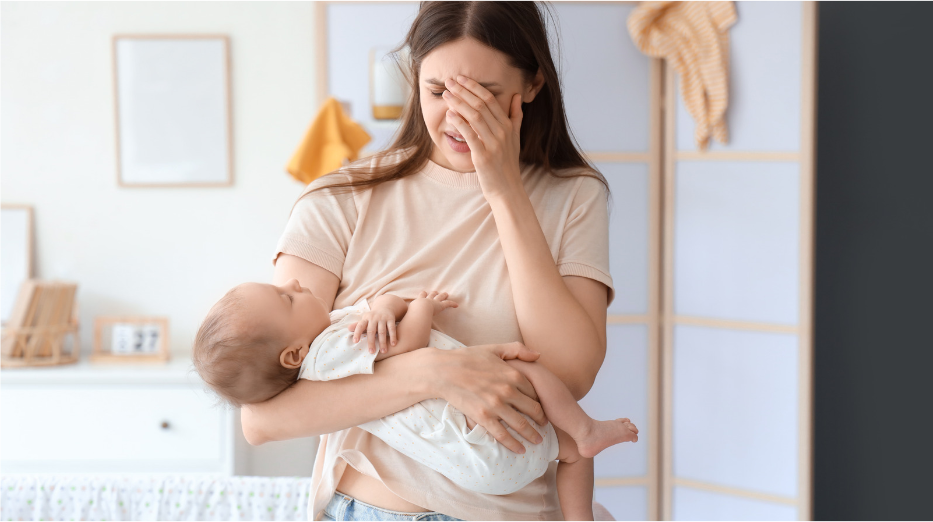
The baby is finally asleep. After another long evening of crying, feeding, rocking, and walking the halls, I quietly lowers my little one into the crib. I pause for a moment, watching the rise and fall of that tiny chest. Then I slip out of the nursery, close the door, and begin to cry.
I'm exhausted. I'm overwhelmed. I haven't slept more than a few consecutive hours in weeks. And tonight, for just a moment, I wish I could escape the endless demands of motherhood.
Almost immediately, the guilt arrives.
"How can I possibly feel this way?
After everything we went through to have this baby?
After all those years of hoping, praying, waiting, and wondering whether I would ever become a mother?"
I remember the fertility appointments, the medications, the procedures, the negative pregnancy tests, and the crushing disappointment that accompanied each unsuccessful attempt. I remember the baby showers I struggled to attend and the pregnancy announcements that brought tears when I was alone. And now, holding the very life I once feared I might never have, I feels something I never expected. Not just gratitude. Not just joy. But exhaustion, frustration, anxiety, and sometimes even grief. "What is wrong with me?" I asks myself. "Am I a horrible person?"
Many of you who have struggled through infertility to become parents can relate. Are you a horrible person? Of Course NOT! You are human. Let's dive into what this means.
When the Dream of Parenthood Meets the Reality:
For individuals and couples who have struggled with infertility, the journey toward parenthood can become all-consuming. Months may turn into years of medical appointments, hormone injections, invasive procedures, financial sacrifices, and emotional uncertainty. Life can begin to feel divided into cycles of hope and disappointment. Will this be the month? Will this treatment work? Will we ever have a child?
When a long-awaited pregnancy finally occurs, or when a child joins the family through another path, there is often tremendous joy and relief. Friends and family celebrate. The congratulations arrive. The nursery fills with tiny clothes, blankets, and all the wonderful reminders that the dream of becoming a parent is finally becoming a reality. From the outside, the story appears to have reached its happy ending. But emotionally, the experience may be far more complicated because becoming a parent does not automatically erase the emotional experiences that came before parenthood. Sometimes the experiences that made the journey to parenthood so difficult continue to influence how we experience the parenting journey itself.
Infertility Is More Than a Medical Diagnosis:
As a family physician, I think it’s important to recognize that infertility is not simply a problem involving reproductive organs, hormones, or the ability to conceive. It can affect nearly every aspect of a person’s life. Infertility may challenge a person’s sense of identity, their relationships, their financial security, their confidence in their own body, and even their understanding of what the future might hold. For some, it involves repeated losses. For others, the uncertainty itself becomes an enormous emotional burden.
The World Health Organization recognizes infertility as a disease of the reproductive system, generally defined by the failure to achieve pregnancy after 12 months or more of regular unprotected sexual intercourse. But that clinical definition cannot begin to capture the full emotional experience of living through it. Research has documented significant psychological distress among people experiencing infertility, including symptoms of anxiety and depression. The European Society of Human Reproduction and Embryology (ESHRE) has developed guidelines specifically addressing the psychosocial needs of individuals and couples undergoing fertility treatment. These guidelines reflect an important reality: emotional well-being is not an incidental concern during fertility treatment. It deserves attention alongside medical care. And while not everyone who experiences infertility develops lasting psychological difficulties, some parents find that the emotional impact continues long after treatment has ended.
Why Having a Baby Doesn’t Always Make Everything Better:
During infertility, it can be easy to imagine that the emotional pain will disappear once a baby finally arrives. And for many families, becoming parents brings profound happiness, healing, and a renewed sense of hope. But the arrival of a child does not necessarily resolve every fear, disappointment, or loss experienced along the way. Consider a parent who has endured years of unsuccessful fertility treatments or repeated pregnancy losses. For years, hope may have been followed by disappointment. A positive pregnancy test may have been accompanied by fear rather than uncomplicated excitement. Even during a healthy pregnancy, reassurance may have felt temporary.
After the baby arrives, that parent may discover that the fear of losing something precious has not entirely disappeared. Instead, the focus of the worry has changed.
Will my baby be okay?
Am I doing everything right?
What if something happens to my child?
Of course, these are concerns that many parents experience, regardless of how they became parents; but for some individuals who have experienced infertility or pregnancy loss, those fears may be intensified by their previous experiences of uncertainty. This does not mean that infertility inevitably leads to anxious parenting, nor does it mean that every parent who experiences these emotions has suffered psychological trauma. It simply means that our past experiences can shape the way we interpret and respond to the present. Understanding those connections can help us approach ourselves with greater compassion.
The Unexpected Burden of Gratitude:
One of the most difficult emotional challenges of parenting after infertility may be the belief that we should always feel grateful.After all, this is the child we desperately wanted. The baby we waited for.
The family we dreamed of having. How could we possibly complain about sleepless nights, tantrums, sibling arguments, or the seemingly endless demands of raising children? Yet somewhere along the way, gratitude can become confused with an obligation to be happy. And that expectation is neither realistic nor emotionally healthy.
You can be profoundly grateful for your child and still find parenting exhausting.
You can love being a mother and still need time away from your children.
You can appreciate the extraordinary journey that brought your family together and still feel frustrated when your toddler has a meltdown in the grocery store.
Gratitude and struggle are not mutually exclusive. One does not cancel out the other. In fact, learning to hold two seemingly contradictory emotions at the same time is an important part of emotional maturity. As parents, we spend a great deal of time helping our children understand that they can experience more than one feeling at once. They can love their sibling and feel angry when that sibling takes their toy. They can be excited about starting school and feel nervous about saying goodbye. They can enjoy a family vacation and still become tired, overwhelmed, or disappointed. Shouldn’t we extend that same understanding to ourselves?
When Our Past Experiences Influence Our Parenting:
As a Peaceful Parenting Coach, one of the principles I emphasize is the importance of understanding what is happening within us when we respond to our children. Parenting is not simply about managing children’s behavior. It involves recognizing our own emotions, expectations, and reactions.
Sometimes, the intensity of our response to a parenting situation has less to do with what our child is doing and more to do with what that situation brings up within us. For a parent who has experienced infertility, this might look like feeling unusually frightened when a child becomes ill. It might involve difficulty allowing a child to take age-appropriate risks or become more independent. Or it might mean struggling with guilt when setting limits, worrying that saying no somehow diminishes the gratitude we feel for having that child. These are possibilities, not inevitable consequences of infertility. Every parent’s experience is different. But when we recognize that some of our reactions may be connected to earlier experiences, we gain an opportunity to respond more intentionally.
We can begin to ask ourselves:
-Am I responding to what my child needs right now, or am I responding to a fear that comes from my own past?
-Is my guilt helping me become the parent I want to be, or is it making parenting more difficult?
-Can I acknowledge what I went through without allowing those experiences to determine every decision I make today?
These questions are not about judging ourselves. They are about developing awareness, and awareness creates space for growth.
Giving Ourselves Permission to Grieve:
One of the more surprising aspects of parenting after infertility is that grief can sometimes resurface even when life is going well. A child’s birthday may bring memories of the years spent wondering whether parenthood would ever happen. A friend’s pregnancy announcement may unexpectedly stir feelings associated with an earlier season of life. A conversation about family size may bring renewed sadness about embryos that did not develop, pregnancies that ended in loss, or children a family had hoped to have but never did. These experiences can be confusing.
Why am I still upset about this?
I have my child now. Shouldn’t I be over it?
But grief does not always follow a predictable timeline. And finding joy in the present does not require us to deny the pain of the past. For some parents, healing may involve acknowledging that infertility was a significant and difficult chapter of their lives, even if it was eventually followed by the joy of welcoming a child. For others, the experience may feel less like an enduring wound and more like a meaningful part of their personal history. Neither response is inherently more appropriate. What matters is giving ourselves permission to recognize our own experiences without comparing them to someone else’s.
When Additional Support May Help:
It’s also important to distinguish between the normal emotional complexity of parenting and symptoms that may indicate a need for additional support. Persistent anxiety, intrusive thoughts, panic, depressed mood, difficulty functioning, or ongoing distress related to fertility experiences deserve compassionate attention. Postpartum depression and anxiety can affect parents regardless of whether pregnancy occurred spontaneously or through fertility treatment. And a history of infertility should never be used to dismiss these symptoms or suggest that a parent ought to feel differently because their child was so deeply wanted. If emotional distress is interfering with daily life, relationships, sleep, or the ability to enjoy or engage in parenting, speaking with a qualified mental health professional can be an important step. For parents who experienced significant distress during fertility treatment, a clinician familiar with reproductive mental health may be particularly helpful.Seeking support does not diminish the joy of becoming a parent. It recognizes that parents deserve care, too.
Your Child Does Not Need You to Be Grateful Every Moment:
Perhaps one of the most important things we can remember is that our children do not need us to be endlessly grateful, endlessly patient, or endlessly happy. They need us to be emotionally available, responsive, and willing to grow alongside them. They need parents who can acknowledge difficult feelings without allowing those feelings to overwhelm the relationship. They need us to set loving boundaries, repair our mistakes, and demonstrate that all emotions are part of being human. And they need to know that they are loved for who they are—not because they fulfilled a dream, ended a painful journey, or made years of suffering worthwhile. Our children are not responsible for healing our infertility. That is a responsibility far too great for any child to carry. They are simply our children.
Wonderful, complicated, imperfect human beings who will challenge us, delight us, frustrate us, and help us grow in ways we could never have anticipated. And we are allowed to be imperfect human beings, too.
 A Different Kind of Happy Ending:
Perhaps we need to rethink what a happy ending looks like after infertility. Maybe it isn’t the moment the pregnancy test turns positive, or the day the baby is born, or the moment a child finally joins the family. Maybe those moments are not endings at all. Maybe they are beginnings. The beginning of a new relationship, a new identity, and a new chapter that will bring its own joys and challenges.
The experiences of infertility may always remain part of our story. But they do not have to define every part of the story that follows. We can honor the journey that brought us to parenthood while giving ourselves permission to experience parenting as it actually is.
Beautiful and exhausting.
Joyful and frustrating.
Meaningful and messy.
And sometimes all of those things before breakfast.
You can be grateful for the family you have and still acknowledge the pain of what it took to get here.
There is room for both. And maybe giving ourselves permission to embrace that truth is one of the most important steps we can take toward parenting with greater peace, compassion, and connection.
Parenting Alongside You,
Dr. Emma and The Aparently Parenting Team
⸻
References and Further Reading
1. World Health Organization. Infertility. WHO fact sheet, 2023.
https://www.who.int/news-room/
2. Gameiro S, Boivin J, Dancet E, et al. ESHRE guideline: Routine psychosocial care in infertility and medically assisted reproduction—a guide for fertility staff. Human Reproduction. 2015;30(11):2476–2485.
https://doi.org/10.1093/humrep
3. Frederiksen Y, Farver-Vestergaard I, Skovgård NG, Ingerslev HJ, Zachariae R. Efficacy of psychosocial interventions for psychological and pregnancy outcomes in infertile women and men: A systematic review and meta-analysis. BMJ Open. 2015;5:e006592.
https://doi.org/10.1136/bmjope
4. American Society for Reproductive Medicine. Mental health and reproductive medicine resources.
https://www.asrm.org/
5. RESOLVE: The National Infertility Association. Resources and support for individuals and families experiencing infertility.
https://resolve.org/
Author note: This article provides general educational information and is not a substitute for individualized medical or mental health care.
SUBSCRIBE FOR FREE PARENTING RESOURCES
We know you're busy! So, we'll make sure to only send the IMPORTANT PARENTING stuff!!
We hate SPAM. We will never sell your information, for any reason.
